Google Stitch vs Pencil
In-depth comparison of Google Stitch and Pencil. Pricing, features, real user reviews.
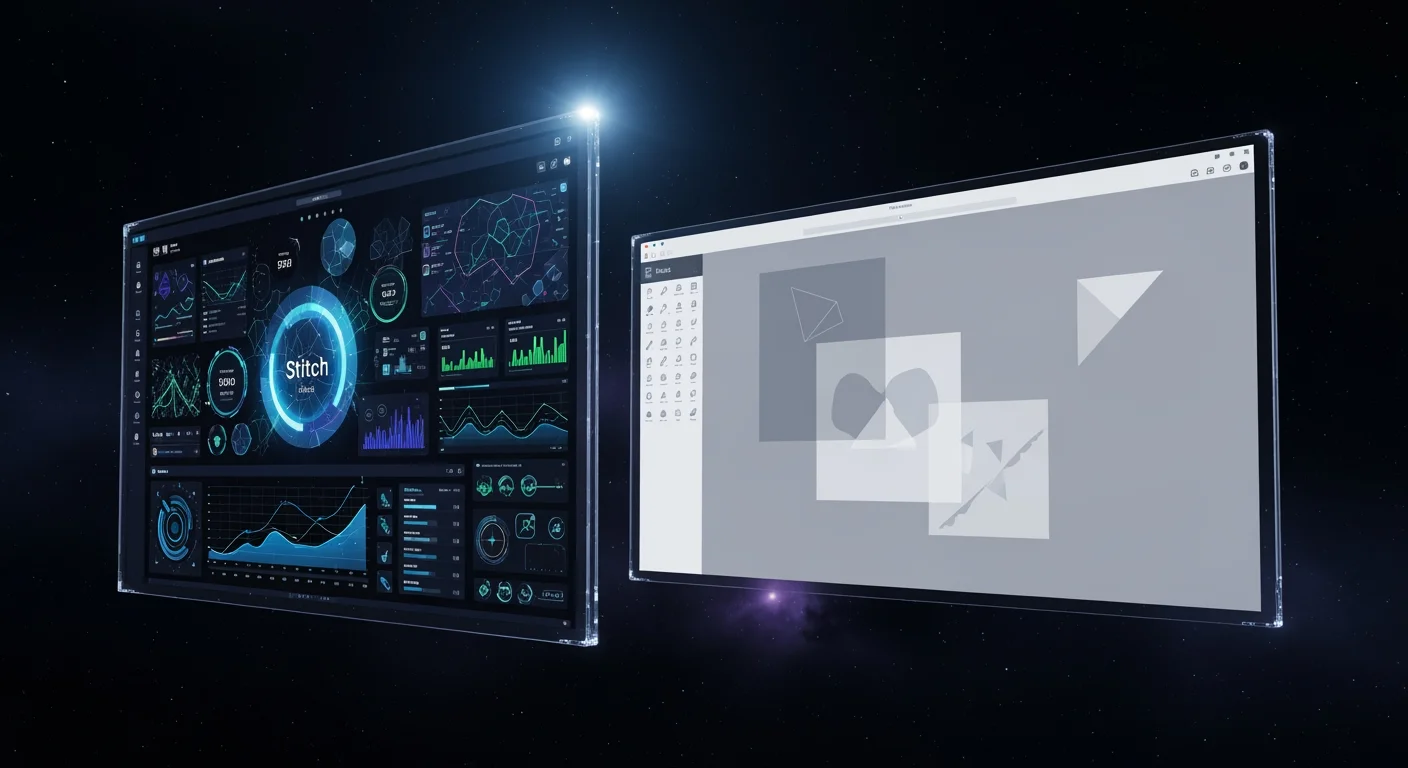
The Contender
Google Stitch
Best for Design
The Challenger
Pencil
Best for Design
The Quick Verdict
Choose Google Stitch for a comprehensive platform approach. Deploy Pencil for focused execution and faster time-to-value.
Independent Analysis
Feature Parity Matrix
| Feature | Google Stitch | Pencil |
|---|---|---|
| Pricing model | freemium | freemium |
This analysis clarifies a common question about design and prototyping tools. It begins by clarifying product names for a precise comparison. The term "Google Stitch" does not correspond to a widely recognized design or prototyping tool within Google's public offerings. Instead, it likely refers to a desire to compare a leading tool influenced by or operating within Google's broader ecosystem. For this purpose, Figma represents the appropriate choice. It is a dominant force in modern UI/UX design and collaboration, known for widespread adoption and a previous acquisition attempt by Google. The comparison will therefore focus on Figma and the open-source GUI prototyping tool, Pencil Project.
This report forecasts the capabilities, relevance, and market position of both tools for the 2025-2026 timeframe. It considers current trends and anticipated developments in design technology.
Overall Verdict: Figma vs. Pencil Project (2025-2026)
By 2025-2026, the comparison between Figma and Pencil Project shows a clear difference. Figma, a leader in modern design standards and influenced by major tech ecosystems, will remain the industry's leading platform. Advancements in artificial intelligence, real-time collaboration, and comprehensive feature sets will drive its evolution. This will solidify its position as an essential tool for professional design teams.
Pencil Project, conversely, will maintain its status as a stable, niche, open-source utility. It will serve primarily for basic, individual wireframing tasks. While valuable for its simplicity and cost-free nature, it will largely remain unsuitable for professional-grade work, complex projects, or collaborative team environments. More advanced platforms like Figma have superseded it.
Figma will reinforce its role as the indispensable platform for professional UI/UX design, prototyping, and real-time collaboration. Its innovation will set industry benchmarks.
Figma will reinforce its role as the essential, advanced platform for professional user interface and user experience design, sophisticated prototyping, and seamless real-time collaboration. Its continuous innovation, particularly in artificial intelligence integration and streamlined developer handoff processes, will establish new industry benchmarks. This confirms Figma as the preferred choice for design teams and enterprises globally.
Pencil Project will continue as a viable, free, and open-source option for very basic, low-fidelity wireframing needs. Its primary users will be individuals, students, or those with very restricted budgets. It will not undergo significant evolution in terms of modern features, collaboration capabilities, or AI integration. Therefore, it will remain inadequate for complex projects or professional team-based design efforts.
Key Differences: Figma vs. Pencil Project
Understanding the fundamental distinctions between these two tools helps select the right one for a specific design task. The following table shows their core differences across several key aspects.
| Aspect | Figma | Pencil Project |
|---|---|---|
| Core Purpose & Scope | Comprehensive UI/UX design, high-fidelity prototyping, design systems, and real-time collaboration for professional teams. | Basic, low-fidelity GUI wireframing and mockups for individual use. |
| Collaboration | Unrivaled real-time, multi-user editing, commenting, and version control, cloud-native. | None; strictly single-user, local file editing. |
| Feature Set & Modernity | Advanced vector editing, auto-layout, sophisticated prototyping (conditional logic), design systems, AI integration, developer handoff. | Basic shapes, text, images, and pre-built UI stencils; lacks modern design features. |
| Technology & Accessibility | Web-based (cloud-native) with desktop apps, accessible from any device, continuous updates. | Desktop application (local installation), less frequent updates, no cloud integration. |
| Ecosystem & Extensibility | Vast plugin and widget marketplace, strong community, integrations with other tools. | Limited; community-driven stencils, no plugin architecture. |
| Innovation & Development | Rapidly evolving, AI-driven, industry leader, setting new standards. | Slow, community-dependent, stable but largely static, unlikely to adopt cutting-edge features. |
| Pricing Model | Tiered subscription (free to enterprise), with potential premium AI add-ons. | Completely free and open-source. |
| Target User / Market | Professional designers, design teams, product managers, developers, enterprises. | Individuals, students, hobbyists, or those needing very quick, simple, and free mockups. |
Figma: The Future (2025-2026)
Figma is the indispensable tool for user interface and user experience design. Its cloud-native architecture and collaborative capabilities redefined how design teams operate. By 2025-2026, Figma will continue to innovate. It will integrate advanced technologies and expand its ecosystem. This will meet the evolving demands of digital product development.
Real-time Collaboration
Figma’s unparalleled multi-user editing, commenting, and version history will remain a cornerstone of its offering. Teams will continue to design together in the same file, regardless of location. The platform will likely introduce more sophisticated moderation tools and advanced review workflows, allowing for structured feedback loops and clearer decision-making within large teams. This ensures design consistency and efficient iteration cycles.
Vector Editing and Prototyping
The platform's advanced vector tools, combined with features like Auto Layout, will evolve further. Designers will create complex, responsive interfaces with greater ease and precision. Sophisticated prototyping capabilities, including interactive components with conditional logic and variables, will become even more intuitive. This allows for the creation of highly realistic and functional prototypes, simplifying user testing and stakeholder presentations.
Design Systems and Libraries
Figma offers robust support for creating, managing, and scaling design systems. This feature will see further refinement. Expect potential AI-driven suggestions for component creation, usage guidelines, and automated auditing for consistency across large projects. Centralized libraries ensure brand coherence and significantly speed up design workflows, reducing redundant effort and errors.
Dev Mode (Enhanced Developer Handoff)
Introduced in 2023, Dev Mode aims to bridge the gap between design and engineering. By 2025-2026, this feature will likely receive significant enhancements. Expect even tighter integration with developer workflows, offering more accurate code generation snippets for various frameworks, improved documentation capabilities, and better synchronization with development environments. This reduces friction and ensures designs translate accurately into functional products.
Plugins and Widgets
Figma boasts a thriving marketplace of third-party plugins and widgets, extending its core functionality. This ecosystem will continue to grow, with a notable increase in AI-powered tools. These plugins will assist with tasks such as automated content generation (e.g., placeholder text, image suggestions), accessibility checks, and design optimization. The community-driven nature of this marketplace ensures continuous innovation and adaptability.
AI Integration
Artificial intelligence will be a major growth area for Figma. Designers can expect AI to assist in various ways:
- Design Generation: Suggesting layouts, color palettes, and component variations.
- Accessibility Checks: Automated identification and suggestions for improving accessibility.
- Content Generation: Placeholder text, image suggestions.
- Code Snippets: More intelligent code generation from designs.
- Design System Management: Automated auditing and suggestions for consistency.
FigJam
FigJam, Figma's online whiteboard, will continue its role as a powerful tool for brainstorming, workshops, and ideation. It will integrate more deeply into the overall design workflow, facilitating seamless transitions from ideation to design. Enhanced AI assistance within FigJam will help organize thoughts, summarize discussions, and even suggest next steps, making collaborative sessions more productive.
Tip: Figma's continuous integration of AI will not replace designers but will augment their capabilities. It will automate repetitive tasks and provide intelligent suggestions to accelerate creative processes.
Potential Expansions (Speculative)
Looking ahead, Figma might explore more advanced capabilities. This could include deeper integration with 3D design tools or even venturing into VR/AR prototyping for immersive experiences. Furthermore, a closer integration with broader Google Workspace tools, such as Docs, Sheets, or Meet, could create a more holistic creative and collaborative suite, though such developments remain speculative.
Pencil Project: Its Enduring Role (2025-2026)
Pencil Project remains a free and open-source graphical user interface (GUI) prototyping tool. Its development and feature set are largely stable. It reflects its community-driven nature and focus on fundamental wireframing. By 2025-2026, its core functionality will likely remain consistent. It will serve a specific user base.
Basic GUI Prototyping
The primary function of Pencil Project involves drawing basic shapes, adding text, inserting images, and connecting these elements to form simple wireframes. Users can quickly sketch out interface ideas and arrange components on a canvas. This manual approach provides direct control over element placement, suitable for initial conceptualization.
Pre-built UI Stencils
Pencil Project includes a collection of pre-drawn user interface elements, known as stencils. These stencils cater to various platforms, including desktop (Windows, Mac), web (general, Bootstrap), and mobile (Android, iOS). This drag-and-drop capability allows for rapid mockup creation without needing to draw every element from scratch. The availability of these stencils simplifies the process of representing common interface components.
Export Options
The tool supports exporting designs into several common formats. Users can save their work as PNG images, PDF documents, HTML files, and OpenDocument files. These export options facilitate sharing static mockups with others, enabling basic review and feedback outside the application itself. The HTML export creates a simple, clickable representation of the wireframe.
Open-Source Nature
As an open-source application, Pencil Project's development relies on community contributions. Updates, bug fixes, and the creation of new stencils depend on volunteer efforts. This can lead to an infrequent update cycle. Users possess the flexibility to create and share their own custom stencils, expanding the tool's utility within specific communities.
No Collaboration
Pencil Project lacks any built-in features for real-time collaboration, version control, or shared libraries. It functions as a strictly single-user application where files are edited locally. This absence of collaborative functionality makes it unsuitable for team-based design work or projects requiring simultaneous input from multiple stakeholders.
Limited Advanced Features
The tool does not offer modern design features found in contemporary platforms. These include Auto Layout, advanced interactive prototyping capabilities (such as conditional logic or variables), comprehensive design system management, or component libraries with inheritance. Its simplicity means it cannot handle the complexity required for high-fidelity or interactive prototypes.
No AI Integration
There are no current or projected plans for artificial intelligence integration within Pencil Project. Its fundamental focus on manual wireframing means it will not incorporate AI-driven assistance for design generation, optimization, or content creation. This reflects its position as a basic utility rather than an evolving design platform.
Warning: Pencil Project's lack of modern features and collaboration capabilities makes it unsuitable for professional design teams or complex, interactive projects. Relying on it for such tasks will lead to significant workflow inefficiencies.
Pricing Models Compared
The financial aspect often plays a significant role in tool selection. Figma and Pencil Project represent two ends of the spectrum in terms of pricing, catering to different user needs and budgets.
Figma Pricing (2025-2026)
Figma is expected to maintain its tiered subscription model, designed to accommodate a range of users from individuals to large enterprises. This structure allows organizations to scale their usage and features according to their specific requirements.
- Starter: This tier will likely continue offering basic functionality, sufficient for personal use, limited files, and a small number of collaborators. It serves as an effective entry point for new users and an educational resource, allowing individuals to learn the platform without initial cost.
- Professional: This remains the core offering for most design teams. It provides unlimited files, advanced prototyping features, shared libraries, and robust version history. While pricing may see incremental increases or feature re-bundling, it will continue to provide comprehensive tools for active design collaboration.
- Organization: Geared towards larger companies, this tier offers enhanced features such as advanced security protocols, centralized administration capabilities, and detailed analytics. These features support governance and oversight for enterprise-level design operations.
- Enterprise: Designed for the largest organizations, this tier includes dedicated support, the most advanced security features, and custom integration options. It caters to complex operational needs and specific compliance requirements.
- AI Add-ons: It is plausible that some of Figma's more advanced AI features, given their development cost and value, might be offered as premium add-ons or become exclusive to higher-tier plans. This allows Figma to monetize its significant investment in AI research and development.
Pencil Project Pricing (2025-2026)
Pencil Project operates under a fundamentally different model, making it accessible to anyone without financial barriers.
- Status: Pencil Project is completely free and open-source. There are no subscription fees, one-time purchase costs, or hidden charges associated with its use. This makes it an attractive option for individuals, students, or projects with zero budget constraints.
- Licensing: The software is distributed under the GNU General Public License. This license ensures users can freely use, modify, and distribute the software. This open licensing model promotes community involvement and customization.
Advantages and Disadvantages
Both Figma and Pencil Project offer distinct benefits and drawbacks, influencing their suitability for various design tasks and user profiles.
Advantages of Figma (2025-2026)
- Industry Standard: Figma is an essential tool for professional design teams and enjoys widespread adoption across the industry, making it a critical skill for designers.
- Unrivaled Collaboration: Its real-time, multi-user editing, commenting features, and robust version history facilitate seamless teamwork, regardless of geographical location.
- Comprehensive Feature Set: Figma supports the entire design process, from initial wireframing to high-fidelity prototyping, advanced vector tools, and dynamic Auto Layout.
- Robust Design Systems: The platform provides excellent capabilities for creating and managing design systems, ensuring consistency, scalability, and efficiency across projects.
- Powerful Ecosystem: An extensive marketplace of plugins and widgets, coupled with a vibrant community, extends functionality and provides abundant resources.
- AI-Driven Innovation: Figma leads in integrating AI into design workflows, offering automation and intelligent assistance to accelerate the design process.
- Strong Developer Handoff: Dev Mode will continue to evolve, effectively bridging the communication gap between design and engineering teams.
- Web-Based: Its cloud-native nature makes it accessible from any device with an internet connection. This eliminates the need for heavy local installations.
Disadvantages of Figma (2025-2026)
- Cost: For larger teams or those operating on tight budgets, the subscription costs for advanced tiers can become a significant expense.
- Complexity: New users or those requiring only basic functionality might find Figma's extensive feature set overwhelming, leading to a steeper learning curve.
- Performance: While generally robust, extremely large or complex files can occasionally lead to performance degradation, particularly within the browser environment.
- Vendor Lock-in: Due to its comprehensive ecosystem and proprietary file format, migrating complex projects away from Figma can present considerable challenges.
- Privacy Concerns: As a cloud-based tool, general concerns regarding data privacy and security can arise, although Figma maintains a strong track record and implements robust security measures.
Advantages of Pencil Project (2025-2026)
- Free and Open-Source: There is no cost involved in acquiring or using Pencil Project, making it universally accessible.
- Simple and Lightweight: The tool is easy to learn for basic wireframing tasks and has a small software footprint, requiring minimal system resources.
- Good for Quick, Basic Wireframes: It excels at rapidly sketching low-fidelity ideas and concepts, ideal for initial brainstorming sessions.
- Local Installation: Once installed, it does not require an internet connection for operation, ensuring data remains on the user's local machine.
- Cross-Platform: Availability on Windows, macOS, and Linux offers flexibility for users across different operating systems.
Disadvantages of Pencil Project (2025-2026)
- Lacks Modern Features: It offers no real-time collaboration, advanced prototyping, design system management, or AI integration, which are standard in modern tools.
- Outdated UI/UX: The interface and overall user experience feel dated compared to contemporary design software, potentially impacting usability.
- Limited Stencil Libraries: While functional, the built-in and community stencils are less comprehensive and modern than those available in leading design tools.
- Slow Development Cycle: Being community-dependent, updates and new features are infrequent, giving the impression of an unmaintained project.
- Not Suitable for Professional Teams or Complex Projects: Its inherent limitations make it impractical for serious, collaborative, or high-fidelity design work.
- No Cloud Integration: The absence of cloud integration restricts sharing, backup capabilities, and accessibility across different devices.
Reputation and User Feedback
The perception and feedback from users and the industry greatly influence a tool's standing. By 2025-2026, the reputations of Figma and Pencil Project will likely reflect their current paths.
Figma Reputation (2025-2026)
Figma's reputation will remain exceptionally strong. It solidifies its status as the industry leader and a benchmark for design tools. It will remain indispensable for professional design workflows.
Users consistently praise its unmatched real-time collaboration, powerful and comprehensive feature set, extensive plugin ecosystem, and web-based accessibility. Users laud its continuous innovation, particularly in AI and developer handoff. This streamlines design workflows and fosters team cohesion. Figma enables efficient, distributed design teams.
Occasional criticisms might include performance issues when handling extremely large files, particularly in browser environments. The desktop application often mitigates this. Absolute beginners might note a steeper learning curve compared to simpler alternatives. The cost could remain a factor for very small teams or individual freelancers. General privacy concerns associated with cloud-based tools might still arise. This occurs despite Figma's robust security measures and strong track record.
Pencil Project Reputation (2025-2026)
Pencil Project will maintain a niche reputation as a functional, free tool for basic needs. Modern alternatives will largely supersede it for professional use. It will remain a choice for specific, limited scenarios.
Users appreciate its simplicity, cost-effectiveness (being free), and its utility for quick, low-fidelity mockups. Its local control over files and cross-platform availability also receive positive notes. For rapid ideation or educational purposes, it will retain value.
Primary criticisms center on its severe lack of modern features, especially real-time collaboration, and its outdated interface. Its limited scalability for complex projects and slow development cycle renders it unsuitable for contemporary professional design workflows or team environments. Users perceive it as a legacy tool, offering basic functionality but falling short of industry demands.
Expert Outlook
Industry experts provide valuable insights into the future path of design tools. Their perspectives on Figma and Pencil Project reflect broader trends in digital product design.
Figma Expert Outlook
Experts predict Figma will continue its dominance in the UI/UX design space. Aggressive AI integration, significantly enhanced developer workflows, and a continuously expanding collaborative ecosystem will fuel this leadership. It remains the benchmark for professional design. It sets trends in areas such as accessibility, design systems, and potentially new immersive design paradigms. Its strategic importance in the design world will only grow. This solidifies its position as an indispensable platform for innovation.
Pencil Project Expert Outlook
Expert consensus suggests that Pencil Project will remain a niche, free, and open-source option for very basic, individual wireframing needs. Significant feature development or widespread adoption in professional settings remains highly unlikely. Its value limits to its simplicity and cost-free nature. It suits educational or very low-budget personal projects. Experts do not expect it to compete with modern, cloud-based, collaborative tools for serious design work.
The Bottom Line
Choosing between Figma and Pencil Project depends entirely on specific project requirements, team structure, and budget constraints. Their roles in the design ecosystem are fundamentally different.
Figma: The Professional's Choice
Figma will serve as the indispensable tool for professional designers and teams in 2025-2026. It represents the pinnacle of modern design and prototyping. Its continuous innovation, particularly in AI and collaboration, ensures its position as the industry standard, albeit with a cost. It is built for scale, complexity, and team efficiency. It drives the future of digital product design. For any serious, collaborative, or high-fidelity design work, Figma remains the clear and dominant choice. It offers a comprehensive solution that evolves with industry demands.
Pencil Project: The Basic Utility
Pencil Project will serve as a basic, free utility for quick, low-fidelity wireframing for individuals or educational purposes. It offers simplicity and local control. However, it fundamentally lacks the advanced features, collaboration capabilities, and modern user interface necessary for contemporary professional design workflows. It functions as a tool for initial ideation and sketching. It does not provide comprehensive design and development capabilities. Pencil Project will remain a distant alternative to industry-leading platforms. It suits only the most rudimentary and non-collaborative design tasks.
Intelligence Summary
The Final Recommendation
Choose Google Stitch if you need a unified platform that scales across marketing, sales, and service — and have the budget for it.
Deploy Pencil if you prioritize speed, simplicity, and cost-efficiency for your team's daily workflow.