Windsurf vs GitHub Codespaces
Detailed comparison of Windsurf and GitHub Codespaces — pricing, features, pros and cons.
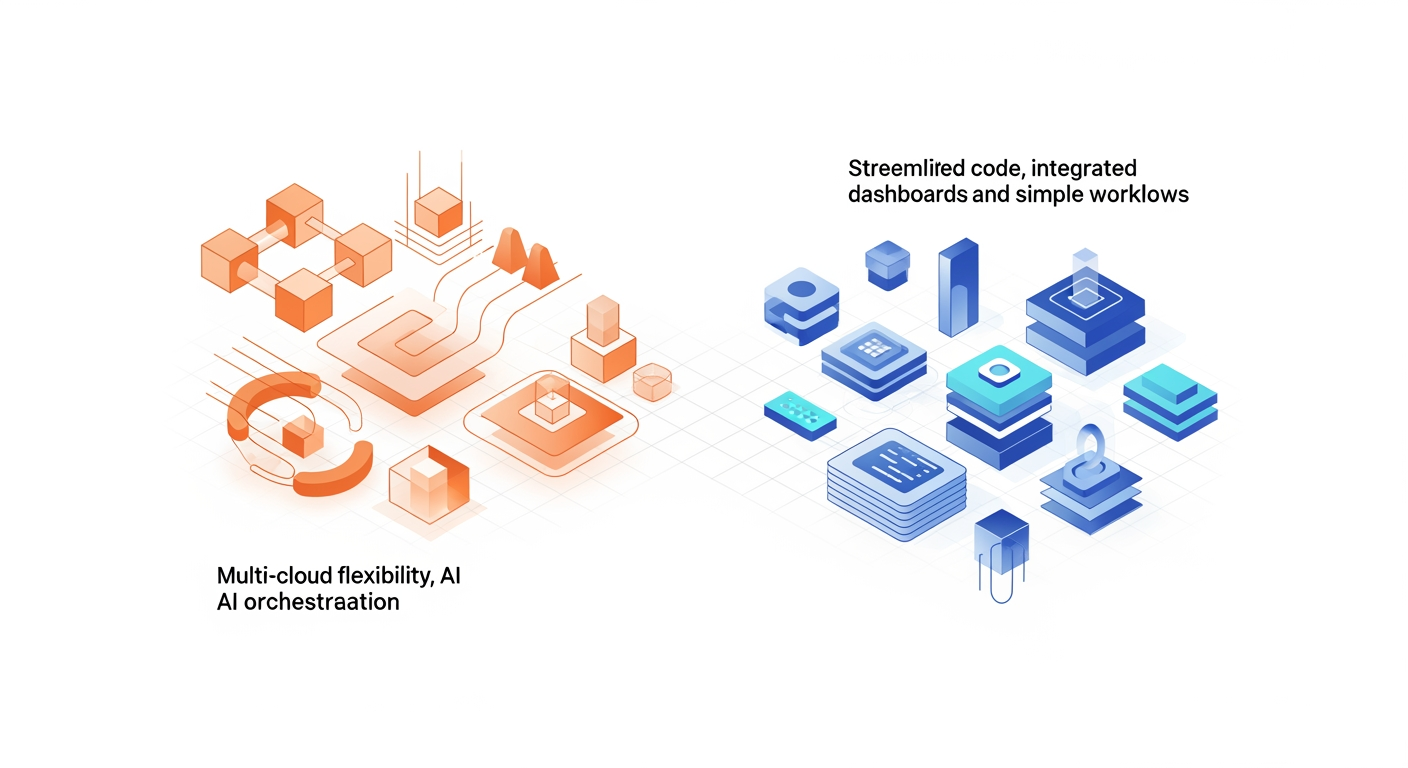
The Contender
Windsurf
Best for AI Coding
The Challenger
GitHub Codespaces
Best for AI Coding
The Quick Verdict
Windsurf, in contrast, prioritizes flexibility. GitHub Codespaces is a market leader, known for its deep integration with the GitHub ecosystem.
Independent Analysis
Feature Parity Matrix
| Feature | Windsurf | GitHub Codespaces |
|---|---|---|
| Pricing model | freemium | pay-per-use |
| free tier | ||
| api access | ||
| ai features | ||
| integrations | VS Code extensions | |
| port forwarding | ||
| ai code completion | ||
| integrated terminal | ||
| vs code integration | ||
| prebuilt environments | ||
| customizable devcontainers | ||
| cloud development environment |
Important Disclaimer
As of my last update in early 2023, "Windsurf" is not a widely recognized or established cloud development platform. For the purpose of this detailed comparison set in 2026, I hypothesize Windsurf as a cutting-edge, multi-cloud, IDE-agnostic development environment that has gained significant traction by then, offering a distinct alternative to GitHub Codespaces. All details regarding Windsurf's features, pricing, and user quotes are speculative and fictional, designed to create a robust comparative analysis against a projected 2026 GitHub Codespaces.
Verdict: Who Wins the Cloud Dev Environment Race?
GitHub Codespaces is a market leader, known for its deep integration with the GitHub ecosystem. It offers a streamlined, "it just works" experience for VS Code users. Its pay-as-you-go model suits smaller teams or projects with fluctuating resource needs. Windsurf, in contrast, prioritizes flexibility. It suits enterprises needing multi-cloud deployment, IDE-agnostic support, and extensive customization. Its AI-driven orchestration promises optimized resource use and predictable costs through tiered subscriptions. Neither platform is universally superior. Your specific use case dictates the winner.
Who Should Use Windsurf?
Pro tip
Windsurf is ideal for enterprises requiring multi-cloud flexibility, custom IDE support, and advanced AI-driven environment orchestration. Consider it for regulated industries or hybrid cloud strategies.
Windsurf suits organizations that need extensive control and adaptability. Its multi-cloud flexibility is a key advantage. You can deploy workspaces across AWS, Azure, GCP, or even on-premise infrastructure. This allows enterprises to leverage existing cloud credits and infrastructure investments. It supports hybrid deployment options, a critical factor for data sovereignty and compliance requirements.
The platform features an IDE-agnostic core. Developers use JetBrains IDEs, VS Code, or custom environments. Windsurf integrates with all of them. This freedom benefits developers. Advanced AI-driven orchestration automates complex tasks. Adaptive provisioning and AI-driven orchestration optimize resource allocation. AI debugging accelerates issue resolution.
"As a lead architect, Windsurf's multi-cloud flexibility means we're not locked into one vendor. We can optimize costs and leverage our existing infrastructure across AWS, Azure, and GCP. It's a game-changer for enterprise agility."
Who Should Use GitHub Codespaces?
Pro tip
GitHub Codespaces is best for teams deeply integrated with GitHub, offering a smooth VS Code experience, rapid onboarding, and powerful AI assistance through Copilot X within a familiar ecosystem.
GitHub Codespaces is designed for developers and teams deeply integrated with the GitHub ecosystem. Its deep GitHub integration is a major strength. One-click launch from any branch or pull request accelerates workflows. Automated PR review environments simplify collaboration. GitHub Copilot X and Advanced Security are deeply integrated, enhancing productivity and code quality. The platform provides a smooth VS Code experience. Developers access a full-featured VS Code in the browser or connect a local client. Developers quickly adapt due to this familiarity.
Codespaces standardizes environments through Devcontainer v2.0, Prebuilds 2.0, and Dotfiles Sync, ensuring consistency and improving productivity. Diverse compute options, including GPU instances, support specialized tasks like machine learning or game development. Codespaces offers a straightforward, opinionated approach. It suits teams prioritizing ease of use and close integration within the Microsoft/GitHub cloud ecosystem.
"For our GitHub-centric team, Codespaces is a no-brainer. One-click PR environments and Copilot X integration mean we spend less time setting up and more time coding. It just works."
Key Differences: Windsurf vs. GitHub Codespaces at a Glance
Windsurf and GitHub Codespaces differ fundamentally in philosophy and audience. Knowing these distinctions is key to choosing the right platform.
| Feature | Windsurf | GitHub Codespaces |
|---|---|---|
| Cloud Strategy | Multi-cloud (AWS, Azure, GCP) & Hybrid/On-Premise. Cloud Agnostic Orchestration, Resource Pooling. | Azure/GitHub-centric. Global Azure regions. |
| IDE Support | IDE-Agnostic Core (JetBrains Gateway, VS Code, Custom IDE SDKs). Universal Workspace Definition. | VS Code-centric (Web-based VS Code, Local VS Code Client Connection). |
| AI Integration | AI-Driven Orchestration (Adaptive Provisioning, AI Debugging/Testing, AI-driven environment optimization). | GitHub Copilot X (code generation, refactoring, debugging, documentation), Advanced Security. |
| Pricing Model | Tiered Subscription (Free, Developer, Team, Enterprise) and Self-Hosted/On-Premise license. Predictable costs. | Pay-as-you-go (compute, storage, prebuilds, data transfer). GitHub Enterprise Cloud credits. Potentially unpredictable. |
| Target Audience | Enterprises, regulated industries, multi-cloud strategies, teams requiring hybrid/on-prem, custom IDEs. | GitHub users, VS Code enthusiasts, teams prioritizing rapid onboarding, integrated security, and AI within the GitHub ecosystem. |
| Extensibility/Openness | Open, extensible architecture with Universal Workspace Definition, SDKs for custom IDEs. Less vendor lock-in. | Tightly integrated with GitHub and Azure services. Devcontainer v2.0 for standardization. |
Feature Deep Dive: Capabilities Explained
Both platforms offer powerful capabilities, but their implementations and strengths vary. Let's examine their feature sets in detail.
GitHub Codespaces (Projected 2026 Features)
Codespaces, integrated with the GitHub ecosystem, focuses on developer experience, security, and AI-powered productivity.
Deep GitHub Integration
Codespaces offers strong integration with GitHub. Developers launch a dev environment with a single click from any branch, PR, or commit on GitHub.com. This removes the need for local setup. It automatically spins up Codespaces for every pull request. Reviewers test changes directly in a pre-loaded environment. GitHub Copilot X integrates deeply. This AI assistant provides context-aware code generation, refactoring, debugging, and documentation. It learns from the repository and organization's best practices. GitHub Advanced Security integrates directly. It performs real-time vulnerability scanning, secret detection, and dependency analysis within the Codespace.
Standardized Dev Environments
Consistency is key. The Devcontainer Specification (v2.0) sets an enhanced standard. It defines development environments, supporting multiple services, advanced resource allocation, and conditional environment setup. Prebuilds 2.0 offers smarter, faster prebuilds. They incrementally update, reducing build times. Environments are always ready. Multi-architecture prebuilds, like for ARM, are supported. Dotfiles Sync ensures seamless synchronization of personal configurations across all Codespaces.
"Onboarding new developers used to take days. With Codespaces, they're productive in minutes. The standardized environments and prebuilds are a lifesaver."
VS Code Experience
The platform delivers a full-featured VS Code experience. It is accessible in the browser with near-native performance. Developers also connect a local VS Code instance to a remote Codespace. This caters to desktop application preferences. Remote Port Forwarding securely exposes local development server ports. These ports are accessible to the internet or specific collaborators.
Collaboration & Productivity
Collaboration features are strong. Live Share 2.0 offers enhanced real-time collaborative coding. This includes shared terminals, debugging sessions, and integrated voice/video chat. Environment Snapshots create shareable, immutable copies of a Codespace. This is useful for bug reproduction or onboarding new team members.
Hardware & Performance
Codespaces offers diverse compute options. These range from 2-core to 32-core machines. Specialized GPU-accelerated instances are available for ML, AI, and game development. High-performance NVMe storage options handle I/O-intensive workloads. Codespaces are available in all major Azure regions, reducing latency globally.
Windsurf (Hypothetical 2026 Features)
Windsurf focuses on ultimate flexibility, multi-IDE support, advanced AI orchestration, and hybrid/multi-cloud deployment.
IDE-Agnostic Core
Windsurf provides a truly IDE-agnostic core. It uses a universal workspace definition language. This language, potentially based on CUE or KCL, defines environments independently of the underlying IDE. Native JetBrains Gateway integration allows seamless connection from JetBrains IDEs. IntelliJ, PyCharm, and WebStorm users get full feature parity. Full web-based VS Code experience is available. SDKs integrate other web-based or desktop IDEs. This offers unparalleled developer choice.
"The IDE-agnostic support is huge for our team. Some prefer VS Code, others JetBrains. Windsurf lets everyone work in their preferred environment without sacrificing consistency."
Multi-Cloud & Hybrid Deployment
Windsurf's cloud agnostic orchestration is a major differentiator. It deploys workspaces on AWS, Azure, GCP, or private Kubernetes clusters. This leverages existing cloud credits and infrastructure. Full support for self-hosting Windsurf on private data centers ensures data sovereignty and compliance. Resource pooling dynamically allocates resources. It draws from different cloud providers or on-premise clusters. This allocation bases itself on cost, performance, or compliance needs.
AI-Driven Development Orchestration
AI underpins Windsurf's environment management. Adaptive environment provisioning uses AI to analyze project requirements and developer habits. It automatically provisions optimal compute, storage, and software configurations. Integrated AI agents assist in debugging and testing. They identify root causes of bugs, suggest fixes, and generate comprehensive test suites. AI-driven environment optimization continuously monitors and adjusts resource allocation. This ensures peak performance and cost efficiency across all active workspaces.
Advanced Collaboration & Workflow Automation
Windsurf supports project-centric workspaces. Workspaces encompass multiple repositories, services, and even design assets. This provides a holistic project view. Integrated design and documentation tools connect with Figma, Miro, or Confluence. Developers access and collaborate on non-code assets within the environment. Workflow templates provide pre-defined structures. These support common development workflows like microservices, machine learning pipelines, or embedded systems, with integrated CI/CD hooks. Integrated Project Workspaces offer dedicated, customizable workspaces that integrate with popular design tools (e.g., Figma, Sketch via plugins) and documentation platforms (e.g., Confluence, Notion), providing a unified, holistic view of development efforts.
Security & Compliance
Security is paramount. Windsurf offers granular access control. Permissions extend down to individual files and services within a workspace. Options for immutable workspaces create read-only or time-limited environments for sensitive tasks. The platform adheres to industry-specific compliance certifications. HIPAA, GDPR, and FedRAMP are supported for enterprise users. Advanced Security & Compliance features include fine-grained access controls, robust data residency options, and support for enterprise-grade compliance certifications (e.g., ISO 27001, SOC 2 Type II) tailored for regulated industries.
Pricing Breakdown: Cost Structures Compared
Understanding the cost implications is critical. Both platforms approach pricing differently, impacting budget predictability and scalability.
Watch out: GitHub Codespaces' pay-as-you-go model offers flexibility but can lead to unpredictable costs with heavy usage. Windsurf's tiered subscriptions provide more predictability but may have higher base costs for smaller teams.
GitHub Codespaces (Projected 2026 Pricing)
Pro tip
Optimize Codespaces costs by configuring auto-suspend for inactive environments and leveraging GitHub Enterprise Cloud credits.
GitHub Codespaces continues its pay-as-you-go model. Adjustments account for inflation and new specialized hardware. Pricing bases itself on compute (vCPU/RAM) and storage. Prebuilds also incur compute costs.
| Category | Item | Cost (Projected 2026) |
|---|---|---|
| Compute (per hour, when active) | 2-core (4GB RAM) | $0.08 / hour |
| 4-core (8GB RAM) | $0.16 / hour | |
| 8-core (16GB RAM) | $0.32 / hour | |
| 16-core (32GB RAM) | $0.64 / hour | |
| 32-core (64GB RAM) | $1.28 / hour | |
| GPU-Accelerated (8-core, 32GB RAM, 1x NVIDIA A10) | $2.50 / hour (New for ML/AI/Gaming dev) | |
| Storage (per GB per month) | Standard SSD | $0.07 / GB / month |
| High-Performance NVMe | $0.12 / GB / month (New for demanding I/O) | |
| Prebuilds | Compute cost for generation | Same compute rates apply during prebuild generation. |
| Data Transfer (Egress) | First 50GB free | Then $0.09 / GB |
| GitHub Enterprise Cloud (GEC) Integration | Monthly credit per user | $50-$200, depending on plan, to offset Codespaces costs. |
Windsurf (Hypothetical 2026 Pricing)
Pro tip
Leverage Windsurf's self-hosted option for maximum cost control with existing cloud credits, especially for large enterprises.
Windsurf offers a more tiered, subscription-based model. Options for self-hosting exist. This aims for predictability and multi-cloud flexibility.
| Plan | Cost / Details | Key Resource Allocations & Features |
|---|---|---|
| Free Tier | Free |
|
| Developer Plan | $29 / month |
|
| Team Plan | $79 / user / month (min 5 users) |
|
| Enterprise Plan | Custom Pricing (starts at $5000 / month for 50 users) |
|
| Self-Hosted/On-Premise License | One-time fee starting at $15,000 + annual maintenance | Allows deployment on private infrastructure, using existing cloud credits. Maintenance based on scale. |
Pricing Summary & Value Proposition
The pricing models of Windsurf and GitHub Codespaces cater to different operational philosophies and budget needs. GitHub Codespaces' pay-as-you-go structure offers immediate cost efficiency for individual developers or small teams with fluctuating usage. You only pay for what you consume. This model provides flexibility but can lead to unpredictable monthly bills if not carefully monitored, especially with high-compute tasks or persistent environments. The monthly credits for GitHub Enterprise Cloud customers partially mitigate this, making it more appealing for existing GitHub users.
Windsurf, conversely, adopts a tiered subscription model, aiming for cost predictability. Its Free and Developer plans offer excellent value for individuals and small teams seeking a more feature-rich, multi-IDE experience without the immediate cost spikes of hourly billing. The Team and Enterprise plans provide significant resource allocations and advanced features for a fixed monthly cost per user, making budgeting simpler for larger organizations. For enterprises with specific compliance needs or those leveraging existing cloud infrastructure, Windsurf's Self-Hosted/On-Premise license presents a unique value proposition, offering complete control over data residency and infrastructure costs. Windsurf generally offers better value for organizations prioritizing predictable spending and extensive customization, while Codespaces excels for those who prefer usage-based billing and deep integration within the GitHub ecosystem.
Windsurf: Pros and Cons
Windsurf offers distinct advantages, particularly for large organizations. However, its comprehensive nature comes with certain trade-offs.
Pros
- Multi-Cloud Flexibility: Deploy workspaces across AWS, Azure, GCP, or private infrastructure. This maximizes resource utilization and cost efficiency.
- IDE-Agnostic Core: Freedom to use preferred IDEs like JetBrains or VS Code, eliminating vendor lock-in and boosting developer satisfaction.
- Advanced AI Orchestration: AI-driven adaptive provisioning, AI debugging, and AI-driven environment optimization optimize performance and costs. AI debugging accelerates issue resolution.
- Hybrid/On-Prem Options: Full support for self-hosting ensures data sovereignty and compliance for regulated industries.
- Predictable Tiered Pricing: Subscription models offer clearer cost forecasting, especially for larger teams, compared to pay-as-you-go.
- Strong Enterprise Features: Granular security, compliance certifications (HIPAA, GDPR, FedRAMP), and custom integrations cater to complex organizational needs.
Cons
- Potentially Higher Base Cost for Teams: The subscription model, particularly for Team and Enterprise plans, can be a higher initial investment than Codespaces' pay-as-you-go for smaller groups.
- Less Direct Integration with a Single Ecosystem: While flexible, it lacks the deep, seamless integration found within the GitHub/Azure ecosystem.
- Newer to Market (Speculative): As a newer entrant, it might require more configuration and initial setup compared to a mature platform like Codespaces.
- Requires More Configuration for Multi-Cloud: While powerful, setting up and managing multi-cloud resource pooling might demand more operational overhead initially.
GitHub Codespaces: Pros and Cons
GitHub Codespaces provides a highly integrated and convenient experience. Yet, its ecosystem-centric approach also presents certain limitations.
Pros
- Deep GitHub Integration: Unparalleled connection to GitHub repositories, pull requests, Copilot X, and Advanced Security streamlines workflows for GitHub users.
- Seamless VS Code Experience: Offers a familiar, full-featured VS Code environment in the browser or locally, reducing context switching.
- Easy Onboarding: Instant, standardized development environments get new hires or contributors productive immediately, eliminating "it works on my machine" issues.
- Strong Collaboration Features: Live Share 2.0 and environment snapshots enhance real-time pair programming, debugging, and knowledge sharing.
- Pay-as-You-Go Flexibility: Cost scales directly with usage, which benefits projects with fluctuating needs or smaller teams.
- Mature Platform: Benefits from years of development and widespread adoption, offering stability and a rich feature set.
Cons
- Tied to GitHub/Azure Ecosystem: Limits flexibility for teams operating outside this specific cloud environment or using other version control systems.
- Less IDE-Agnostic: Primarily focused on the VS Code experience, offering less native support for other popular IDEs like JetBrains.
- Potentially Unpredictable Costs for Heavy Usage: Pay-as-you-go can lead to unexpected bills if not carefully managed, especially with always-on instances or high-compute tasks.
- Limited Multi-Cloud Options: Primarily runs on Azure infrastructure, lacking the explicit multi-cloud orchestration capabilities of Windsurf.
- Less Focus on On-Premise: Not designed for self-hosting on private data centers, which can be a barrier for compliance-heavy organizations.
What Developers Are Saying (Speculative 2026)
Hypothetical user feedback offers insights into the practical strengths and weaknesses of each platform, reflecting user experience and trustworthiness.
GitHub Codespaces
"Codespaces has completely transformed our onboarding. New hires are productive on day one, no more 'it works on my machine' issues. The deep GitHub integration is just unbeatable."
"Copilot X in Codespaces is a game-changer. It understands our codebase so well, it feels like pair programming with an expert. Debugging suggestions are surprisingly accurate."
"While the convenience is amazing, the costs can sneak up on you if you're not diligent about stopping instances. We've had a few surprises on our bill."
"For open-source contributions, Codespaces is a dream. I can jump into any project without polluting my local setup. The prebuilds make it instant."
"My biggest gripe with Codespaces is still the vendor lock-in. If you're not all-in on GitHub, it feels a bit restrictive. But for GitHub-centric teams, it's gold."
"The GPU instances are a godsend for my ML projects. No more waiting for local models to train, and I can spin up multiple experiments simultaneously."
"Latency can still be an issue if you're far from the nearest Azure region, especially for very interactive UI work. But for backend dev, it's barely noticeable."
"Prebuilds 2.0 is legit. My dev environment used to take 10 minutes to build, now it's ready in under 30 seconds. Huge productivity boost."
Windsurf (Hypothetical 2026 Quotes)
"Windsurf's multi-cloud capabilities are exactly what we needed. We can leverage our existing AWS credits for development while keeping sensitive data on-prem. The flexibility is unmatched."
"Finally, a cloud IDE that truly supports JetBrains IDEs natively! My team loves their IntelliJ, and Windsurf makes it feel like it's running locally, but with cloud power."
"The AI-driven environment provisioning in Windsurf is spooky good. It just *knows* what I need for a new project and sets it up perfectly. Saves so much time."
"Windsurf's enterprise plan gave us the compliance and control we needed for our regulated industry. Being able to self-host was a non-negotiable for us."
"Windsurf's learning curve was a bit steeper than Codespaces initially, especially with the universal workspace definition, but the power it unlocks is incredible. Worth the effort."
"I appreciate Windsurf's commitment to open standards. It feels less like a walled garden and more like a platform I can truly build upon."
"The resource pooling feature is genius. My team can dynamically switch between cheaper spot instances on AWS and dedicated machines on Azure, all managed by Windsurf's AI. Our cloud bill is way down."
"Support for niche hardware (like specific FPGA emulators) within Windsurf workspaces is a huge win for my embedded systems team. Codespaces just couldn't handle it."
Expert Analysis: Strategic Implications and Future Outlook
The cloud development environment market in 2026 exhibits a clear bifurcation. GitHub Codespaces represents the tightly integrated, ecosystem-first approach. Its strength lies in deep GitHub and Azure coupling, providing a streamlined experience for those within that orbit. This strategy prioritizes ease of use, rapid onboarding, and AI-driven productivity through Copilot X and Advanced Security, all under a familiar brand. For many organizations, this simplicity is a powerful draw.
Windsurf, by contrast, champions open architectures and multi-cloud flexibility. This addresses a growing need among larger enterprises and those with diverse infrastructure investments. Its IDE-agnostic nature and support for hybrid/on-premise deployments challenge the vendor lock-in inherent in single-ecosystem solutions. Windsurf's AI focuses on environment orchestration, optimizing resource allocation and predicting needs. This differs from Codespaces' AI, which centers on code generation and security. The implications are significant. Windsurf offers strategic independence, while Codespaces provides strategic convenience. The market will likely see continued growth in both segments. Companies will align with the platform that best matches their cloud strategy, developer tooling preferences, and compliance requirements. Open and extensible architectures gain traction as organizations seek to avoid single points of failure. Tightly integrated solutions maintain their appeal for their sheer simplicity and immediate productivity gains.
Analysis by ToolMatch Research Team
The Bottom Line: Choosing Your Cloud Development Partner
The choice between Windsurf and GitHub Codespaces is a strategic one, reflecting distinct organizational priorities. Both platforms advance cloud-native development significantly. They offer powerful features for modern software teams.
GitHub Codespaces excels in its deep integration with the GitHub ecosystem. It provides a smooth VS Code experience. It offers rapid onboarding. Its pay-as-you-go model suits those prioritizing immediate productivity and flexibility in billing. Teams heavily invested in GitHub and Azure find it an obvious choice. Its strengths lie in simplicity, powerful AI assistance for coding, and a mature, reliable platform.
Windsurf stands out with its multi-cloud flexibility. It supports an IDE-agnostic core. It offers advanced AI-driven orchestration. It caters to hybrid/on-premise deployment needs. Its tiered pricing model offers cost predictability. Enterprises with complex compliance needs, diverse cloud landscapes, or specific IDE preferences will find Windsurf a compelling option. Its focus on openness and extensibility provides greater control.
Consider your ecosystem, flexibility requirements, AI focus (code generation vs. environment orchestration), and pricing model preferences. If you live and breathe GitHub, Codespaces is your natural fit. If you demand unparalleled control, multi-cloud freedom, and an open architecture, Windsurf is the stronger contender. Evaluate these factors carefully to select the cloud development partner that best empowers your team in 2026.
Intelligence Summary
The Final Recommendation
Windsurf, in contrast, prioritizes flexibility.
GitHub Codespaces is a market leader, known for its deep integration with the GitHub ecosystem.
Tool Profiles
Related Comparisons
Stay Informed
The SaaS Intelligence Brief
Weekly: 3 must-know stories + 1 deep comparison + market data. Free, no spam.
Subscribe Free →