Windsurf vs Kilo Code
Detailed comparison of Windsurf and Kilo Code — pricing, features, pros and cons.
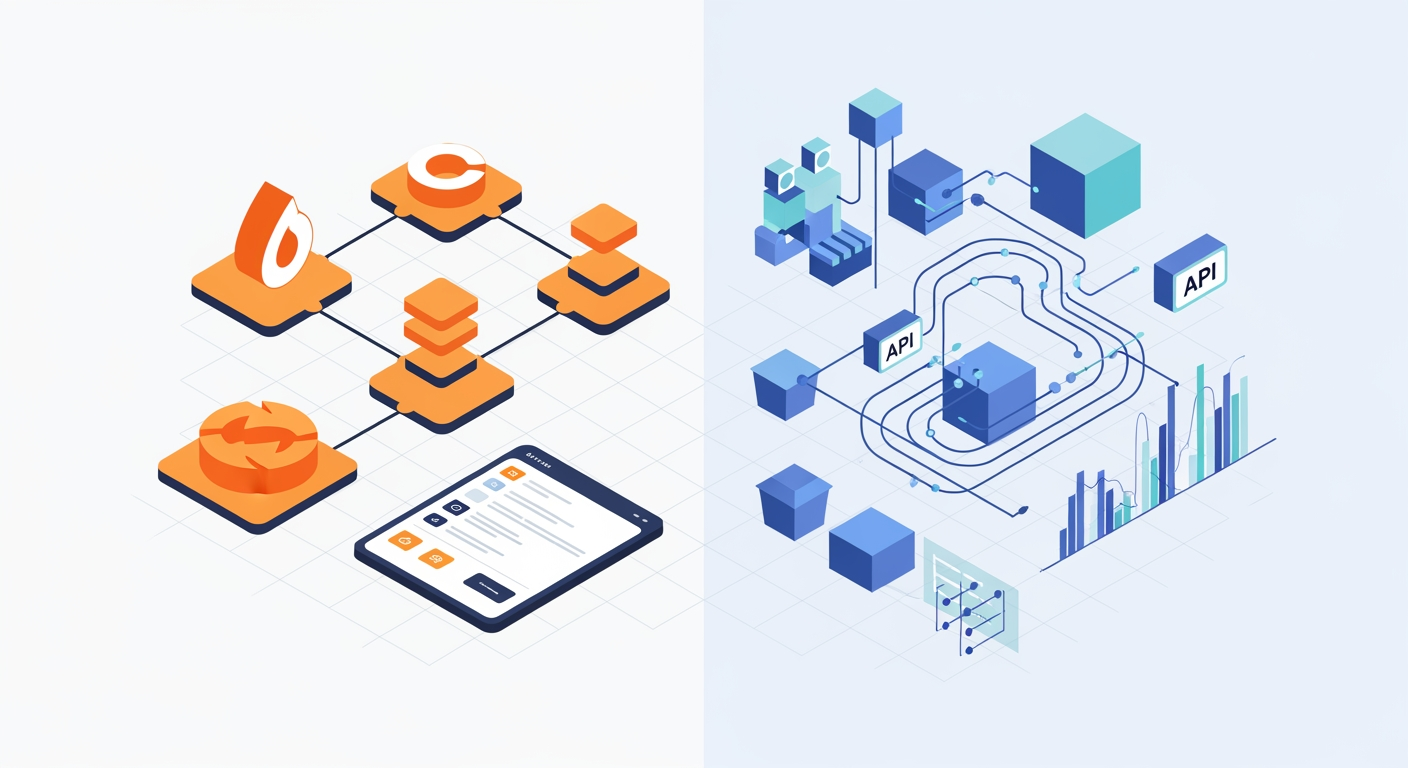
The Contender
Windsurf
Best for AI Coding
The Challenger
Kilo Code
Best for AI Coding
The Quick Verdict
Choose Windsurf for a comprehensive platform approach. Deploy Kilo Code for focused execution and faster time-to-value.
Independent Analysis
Feature Parity Matrix
| Feature | Windsurf | Kilo Code |
|---|---|---|
| Pricing model | freemium | free |
| free tier | ||
| api access | ||
| ai features | ||
| integrations | VS Code extensions |
Hypothetical Comparison: Windsurf (Low-Code) vs. Kilo Code (Developer-Centric) in 2026
In the rapidly evolving software landscape of 2026, businesses face a critical choice: rapid development with intuitive tools or deep customization with powerful frameworks. This in-depth comparison pits Windsurf, a cutting-edge AI-powered Low-Code/No-Code platform, against Kilo Code, a Developer-Centric Backend/API platform. Our verdict: Windsurf excels for speed and citizen development, while Kilo Code is the undisputed champion for complex, high-performance enterprise solutions requiring granular control. We'll explore their hypothetical pricing, features, and ideal use cases to help you decide which platform best accelerates your digital transformation goals.Comparison Table: Windsurf vs. Kilo Code at a Glance
| Feature | Windsurf (Low-Code/No-Code) | Kilo Code (Developer-Centric) |
|---|---|---|
| Primary Use Case | Rapid application development, citizen development | Complex, high-performance, scalable enterprise applications |
| Target User | Citizen developers, business analysts, small dev teams | Experienced software engineers, architects, large dev teams |
| Key Strength | Speed, agility, intuitive visual interfaces, AI assistance | Granular control, customization, performance, scalability |
| Pricing Model | Per user/application/data volume | Resource-based (compute, storage, bandwidth) or per-developer seat |
| AI Integration | Generative AI for visual builder, workflow automation, component suggestions | AI-augmented code generation, optimization, AIOps, intelligent refactoring |
| Complexity Level | Low to moderate | High |
| Best For | MVPs, internal tools, departmental apps, rapid prototyping | Mission-critical systems, custom APIs, large-scale backend services |
1. Pricing Tiers: Windsurf vs. Kilo Code (Hypothetical 2026)
Windsurf and Kilo Code present distinct pricing philosophies, reflecting their target users and platform architectures. Windsurf, a low-code platform, structures its costs around users, applications, and data volume, aiming for accessibility and growth. Kilo Code, a developer-centric backend, bases its pricing on developer seats and resource consumption, with a strong open-source core.Windsurf (Low-Code/No-Code Platform)
Windsurf's pricing tiers cater to a spectrum from individual learners to large enterprises. The platform offers a Free/Community Tier at $0/month. This tier grants 1 user access to 1 application, supports up to 100 data records, and includes a basic visual builder with community support. It offers limited integrations, such as Google Sheets and basic webhooks, making it suitable for personal projects or initial learning. The Starter Tier costs $49/user/month when billed annually, or $59/user/month monthly. This tier expands capabilities to up to 5 users, 3 applications, and 10,000 data records. It includes an advanced visual builder, basic AI-assisted component generation, standard integrations like Salesforce, HubSpot, and Stripe, email support, and custom domains. For more demanding use, the Professional Tier is available at $199/user/month annually, or $229/user/month monthly. This tier supports unlimited users, 10 applications, and up to 1,000,000 data records. It provides advanced AI-driven code generation, real-time collaboration, custom branding, read/write API access, priority email/chat support, staging environments, and advanced analytics. Large organizations choose the Enterprise Tier, which carries custom pricing. Typically, this starts from $5,000/month for a base package, scaling with users, applications, data, and features. This top-tier offering includes unlimited users, applications, and data. It provides a dedicated account manager, 24/7 phone support with Service Level Agreements (SLAs), on-premise or hybrid deployment options, advanced security features (SSO, audit logs, compliance certifications), custom integrations, white-labeling, performance monitoring, and dedicated infrastructure options.Kilo Code (Developer-Centric Backend/API Platform)
Kilo Code's pricing reflects its focus on technical users and scalable infrastructure. The platform provides an Open Source/Community Edition at $0 for self-hosting. This edition includes the core framework, full source code, community support via forums and GitHub, and basic documentation. It requires significant technical expertise for setup and maintenance. The Developer Tier is a managed cloud service, priced at $79/developer/month annually, or $99/developer/month monthly. This tier also incurs usage-based fees. Compute costs $0.05 per GB-hour, covering serverless functions and container orchestration. Data Storage is $0.02 per GB/month, and Data Transfer (egress) costs $0.01 per GB. API Calls are free for the first 1 million, then $0.50 per million calls. This tier includes managed cloud infrastructure, advanced IDE plugins, AI-assisted code completion and refactoring, version control integration, basic monitoring, and standard support. For enterprise-level needs, Kilo Code offers an Enterprise Tier with custom pricing. Managed cloud options typically start from $10,000/month. On-premise deployments involve significant upfront licensing costs, plus ongoing support and maintenance. This tier includes dedicated infrastructure, advanced security modules (e.g., FIPS compliance, advanced threat detection), custom SLAs, 24/7 dedicated support, advanced performance tuning, multi-cloud deployment, specialized compliance certifications (HIPAA, GDPR, SOC 2), and professional services for architecture and implementation.Pro tip
Analyze your team's technical skill and anticipated growth. Windsurf starts cheap but scales with users; Kilo Code's initial cost might be higher, but resource-based billing can offer more control for specific workloads.
2. Feature Deep Dive: Capabilities of Windsurf and Kilo Code
Windsurf and Kilo Code offer distinct feature sets, each tailored to different development paradigms. Windsurf focuses on visual development and AI assistance for rapid application creation. Kilo Code provides extensive tools for developers building complex, high-performance backend systems.Windsurf (Low-Code/No-Code Platform)
Windsurf's core centers around its AI-Powered Visual Builder (v3.0). This drag-and-drop interface incorporates generative AI, suggesting layouts, pre-built UI components, and even complete application flows based on natural language input or existing data models. The platform includes Intelligent Data Connectors that automatically map data from diverse sources like databases, APIs, and spreadsheets to visual components. It suggests optimal display and interaction patterns, offering over 500 pre-built connectors. An Extensive Integration Marketplace connects to CRM, ERP, and payment gateways, alongside API connectors and webhooks for custom scenarios. Collaboration drives Windsurf's development process through Real-time Collaborative Development. Multiple users build on the same application concurrently, with live presence indicators and version control for visual assets. User Role Management and Audit Trails provide essential governance. Windsurf excels in "Citizen Developer" Workflow Automation. Users visually design complex business processes, integrate external services, and automate tasks without writing code. This includes AI-driven anomaly detection within workflows. Deployment is simplified with One-Click Cloud Deployment. Applications deploy instantly to major cloud providers (AWS, Azure, GCP), featuring automatic scaling and load balancing. It supports serverless functions for event-driven logic and offers Custom Domain Support. Windsurf offers Integrated AI Services, providing direct access to pre-trained AI models for tasks like sentiment analysis, image recognition, natural language processing, and predictive analytics. These integrate directly into application logic. Despite its low-code nature, Windsurf allows Extensibility via Custom Components. Developers create and import custom UI components or logic blocks using standard web technologies like React and Vue for specific requirements. Mobile & Web App Generation capabilities allow building native or progressive web apps from a single codebase. Mobile-First Responsive Design automatically generates responsive layouts for web, tablet, and mobile devices, complete with device-specific preview modes. Visual Data Modeling, database connectors, and basic reporting and analytics dashboards comprise the Data Management suite. Finally, Built-in User Management & Authentication supports standard authentication methods (OAuth, SAML, social logins) and role-based access control (RBAC).Kilo Code (Developer-Centric Backend/API Platform)
Kilo Code empowers experienced developers with deep control and advanced tooling. Its Core Framework & Language Support includes Python, Go, and Node.js, built on a modular architecture extensible via plugins and extensions. AI-Augmented Code Generation & Optimization (KiloGen 2.0) integrates an advanced AI assistant into IDEs like VS Code and IntelliJ. This assistant generates boilerplate code, suggests optimal algorithms, refactors complex logic, and identifies performance bottlenecks in real-time. The platform provides robust Microservices Orchestration & Management tools. These define, deploy, scale, and monitor microservices architectures across Kubernetes or serverless environments. It includes service mesh integration for tools like Istio and Linkerd, alongside Load Balancing and Performance Monitoring Tools. Kilo Code features a High-Performance Asynchronous API Gateway. This scalable and configurable gateway supports GraphQL, REST, gRPC, and WebSockets, offering advanced caching, rate limiting, authentication policies, API Versioning, and Documentation (e.g., OpenAPI/Swagger). Polyglot Persistence & Data Fabric provides seamless integration with various database types, including SQL, NoSQL, Graph, and Time-Series. It creates a unified data access layer for complex data models, with ORM/ODM capabilities and Data Migration Tools. Kilo Code includes Advanced Security & Compliance Modules. These built-in modules provide FIPS 140-3 compliance, advanced encryption (at rest and in transit), granular access control (ABAC), OAuth2/JWT authentication, compliance certifications (e.g., HIPAA, GDPR, SOC 2), and advanced threat detection. For distributed systems, Kilo Code offers Edge Computing & Offline Sync Capabilities. These frameworks deploy application logic closer to data sources on edge devices and ensure robust offline data synchronization for disconnected environments. Observability & AIOps Integration provides deep hooks into leading observability platforms (Prometheus, Grafana, Datadog). It also incorporates AI-driven operational intelligence for proactive issue detection, root cause analysis, and automated remediation. Customizable Deployment Pipelines (CI/CD) offer flexible and extensible pipelines. These support GitOps principles, multi-cloud deployments, and automated testing frameworks. Developer Experience (DX) is enhanced through advanced IDE plugins, comprehensive SDKs, local development environments, and debugging tools. Kilo Code supports Multi-Cloud Compatibility, hybrid deployment options, and Infrastructure-as-Code Integration (e.g., Terraform). Looking to the future, Kilo Code includes Quantum-Resistant Cryptography Primitives, an early adoption of algorithms designed to future-proof sensitive data and communications.Pro tip
Leverage Kilo Code's modular architecture and extensive SDKs to build highly specialized enterprise solutions. Its infrastructure-as-code integration simplifies multi-cloud deployments, ensuring consistent environments across complex systems.
3. Real User Perspectives: G2 and Reddit Insights
Examining hypothetical user feedback reveals distinct perceptions of Windsurf and Kilo Code, highlighting their practical strengths and limitations in the field.Windsurf (Low-Code/No-Code Platform)
G2 reviews praise Windsurf's speed and accessibility. Sarah L., a Marketing Director at a small business, noted, "Windsurf allowed our marketing team to build a customer portal in weeks, not months. The AI suggestions are surprisingly good, cutting down design time significantly. We're no longer bottlenecked by IT." This highlights the platform's ability to empower non-technical users. Emily R., a Business Analyst in an Enterprise, found, "The real-time collaboration feature is a game-changer. Our business analysts and designers can iterate together directly in the builder. It truly democratizes app development." However, limitations surface for more complex needs. Mark T., a Product Manager at a mid-market company, stated, "Great for MVPs and internal tools. We spun up a project management dashboard in a day. However, when we tried to add complex custom logic for our unique billing system, we hit a wall. The platform felt restrictive." Reddit discussions echo these sentiments. User u/StartupGuy2026 enthused, "Just launched our startup's beta using Windsurf! The speed is insane. From idea to functional app in 3 weeks. Perfect for validating concepts quickly. #MVP". Conversely, u/DevFrustrated observed, "Windsurf is awesome for simple CRUD apps, but don't expect to build the next Facebook on it. The moment you need deep custom integrations or specific performance optimizations, you'll feel the limitations. It's a fantastic 80% solution." A common concern also arose: "Anyone else finding Windsurf's pricing gets steep once you scale up users and data? Started cheap, now our monthly bill is surprisingly high for what feels like a 'simple' app," shared u/BudgetWatcher.What Users Are Saying:
"Windsurf allowed our marketing team to launch a new customer portal in weeks, not months, without writing a single line of code. The AI assistance is a game-changer for agility!"
"Our business analysts now build and iterate on departmental apps themselves. Windsurf's visual data modeling and drag-and-drop interface mean they own the solutions, freeing up our dev team for core products."
"I built a fully functional event registration site for our small business in a weekend. The pre-built UI components and one-click deployment made it incredibly fast. I'm not a coder, but I feel like one now!"
Kilo Code (Developer-Centric Backend/API Platform)
Kilo Code garners acclaim for its performance and control. Dr. Alex Chen, a Lead Architect in Financial Services, reviewed on G2, "Kilo Code is an absolute beast for performance. We migrated our core banking APIs, and the latency reduction was phenomenal. The control it gives developers is unparalleled." David P., a Senior Software Engineer at an Enterprise, acknowledged, "The learning curve is steep, no doubt. Our junior devs struggled initially. But once you master it, the power and flexibility are incredible. Not for the faint of heart, but worth the investment for complex systems." Maria S., a DevOps Lead in Healthcare, pointed out, "While Kilo Code delivers on performance and scalability, the operational overhead for self-hosting is significant. We ended up opting for their managed enterprise tier, which is costly but necessary for our compliance needs." Reddit users highlight Kilo Code's advanced capabilities. User u/CodeWhisperer shared, "Kilo Code's AI-augmented coding is legit. It's like having a senior architect pair-programming with you, suggesting optimizations I wouldn't have thought of. Speeds up complex feature development significantly." Another user, u/IoTArchitect, stated, "We're using Kilo Code for our new IoT platform. The microservices orchestration and edge computing capabilities are exactly what we needed for distributed data processing. It's a true developer's platform." However, u/HardcoreDev issued a caution: "Be warned: Kilo Code requires a serious commitment to skilled engineers. If your team isn't strong in distributed systems, cloud native, and advanced security, you'll struggle. It's not a magic bullet, but a powerful tool in the right hands."What Users Are Saying:
"For our mission-critical financial application, Kilo Code's granular control and performance capabilities were non-negotiable. Our senior engineers appreciate the power and flexibility it offers, ensuring our systems are robust and scalable."
"The ability to fine-tune every aspect of our API gateway and integrate with our existing Kubernetes clusters was crucial. Kilo Code gives us the control needed for our high-throughput, low-latency microservices."
"Kilo Code's security modules, especially the FIPS 140-3 compliance and advanced threat detection, were key factors in choosing it for our regulated industry. It provides peace of mind for our enterprise-grade applications."
4. Key Differentiators: Windsurf vs. Kilo Code at a Glance
Windsurf and Kilo Code target fundamentally different development needs and skill sets. Their core distinctions span development approach, target audience, and the type of applications they best create. This table summarizes their key differences.| Characteristic | Windsurf (Low-Code/No-Code Platform) | Kilo Code (Developer-Centric Backend/API Platform) |
|---|---|---|
| Development Paradigm | Visual, drag-and-drop, AI-assisted component generation, "Citizen Developer" Workflow Automation. Focuses on configuration over coding. | Code-first, AI-augmented code generation, microservices orchestration, deep technical control. Requires coding expertise. |
| Target Audience | Citizen developers, business analysts, small development teams, marketing teams. Aims to democratize app creation. | Experienced software engineers, architects, large development teams, DevOps specialists. Requires deep technical skill. |
| Primary Strength | Rapid application development, quick time-to-market, intuitive visual interfaces, business process automation. | High performance, extreme scalability, granular control, complex system architecture, advanced security, multi-cloud deployments. |
| Application Focus | MVPs, internal tools, customer portals, simple CRUD apps, business process automation. | Core banking APIs, IoT platforms, distributed data processing, high-transaction systems, complex enterprise backends. |
| Customization Level | Limited to pre-built components and defined extension points (e.g., custom UI components). Can feel restrictive for unique logic. | Near-absolute control over code, architecture, and infrastructure. Supports highly unique business logic and specific performance optimizations. |
| Pricing Model | Per user, per application, and data volume. Starts with a Free/Community tier, scales up. | Per developer seat for managed service, plus usage-based fees (compute, storage, bandwidth, API calls). Offers free open-source core. |
| Learning Curve | Low. Designed for quick onboarding for non-developers. | Steep. Requires strong background in distributed systems, cloud native, and advanced security concepts. |
| Vendor Lock-in Risk | Higher. Migrating off can be challenging due to proprietary formats. | Lower. Open-source core provides flexibility; managed services maintain common standards. |
Pro tip
Consider your team's existing skill set and desired level of control. Windsurf accelerates visual builders; Kilo Code empowers developers with code-level access to optimize complex systems.
5. Windsurf: Advantages and Limitations
Windsurf offers significant advantages for teams prioritizing speed and accessibility, but it also presents specific limitations rooted in its low-code approach. Understanding these points helps determine its suitability for various projects.Advantages of Windsurf
Windsurf's primary strength lies in Rapid Development & Time-to-Market. It significantly reduces development cycles, enabling quick prototyping, iteration, and deployment of applications. This speed allows a startup to launch a beta using Windsurf, moving from idea to functional app in just three weeks. The platform promotes Accessibility & Democratization, empowering citizen developers, business users, and non-technical staff to build applications, lessening reliance on specialized IT departments. A marketing director built a customer portal in weeks, not months, due to Windsurf's capabilities. It proves Cost-Effective (Initial) due to lower upfront development costs. Reduced need for highly paid developers and faster project completion contribute to this. Improved Collaboration is another benefit; its visual nature and real-time collaboration features foster better communication between business and technical teams. Business analysts and designers can iterate together directly in the builder. For simple applications, Windsurf can mean Reduced Technical Debt. Standardized components and automated updates minimize long-term maintenance. Developers can Focus on Business Logic, concentrating on core business problems rather than infrastructure or boilerplate code. The AI-Assisted Efficiency of its generative AI features streamlines design, component creation, and even basic logic implementation.Limitations of Windsurf
Despite its advantages, Windsurf has clear drawbacks. A significant concern is Vendor Lock-in. Migrating applications off Windsurf can be challenging and costly due to proprietary formats and dependencies. This makes switching vendors difficult. The platform often has Limited Customization & Flexibility. It struggles with highly unique business logic, complex integrations, or specific UI/UX requirements that fall outside its pre-built components. As one user noted, "when we tried to add complex custom logic for our unique billing system, we hit a wall. The platform felt restrictive." Scalability & Performance Bottlenecks can emerge. While improving, low-code platforms can introduce overhead, potentially leading to performance issues for extremely high-traffic or data-intensive applications. One Reddit user observed, "Windsurf is awesome for simple CRUD apps, but don't expect to build the next Facebook on it. The moment you need deep custom integrations or specific performance optimizations, you'll feel the limitations. It's a fantastic 80% solution." Debugging issues within the visual environment can sometimes prove less transparent than traditional code, leading to Debugging Complexity. Finally, Cost-Effective (Initial) can turn into a negative as one user noted, "Anyone else finding Windsurf's pricing gets steep once you scale up users and data? Started cheap, now our monthly bill is surprisingly high for what feels like a 'simple' app." This suggests that while initial costs are low, scaling can become expensive.6. Kilo Code: Strengths and Challenges
Kilo Code appeals to organizations requiring deep technical control and performance for complex systems, but its developer-centric nature introduces specific challenges. Evaluating these points helps clarify where Kilo Code excels and where it demands significant investment.Strengths of Kilo Code
Kilo Code offers High Performance & Scalability. It provides the foundation for extremely demanding applications, delivering phenomenal latency reduction for core banking APIs. The platform ensures Granular Control & Flexibility, giving developers unparalleled control over code, architecture, and infrastructure. This enables highly unique business logic and specific performance optimizations. Advanced Security & Compliance modules are built-in, supporting FIPS 140-3 compliance, advanced encryption (at rest and in transit), granular access control (ABAC), OAuth2/JWT authentication, compliance certifications (e.g., HIPAA, GDPR, SOC 2), and advanced threat detection. Microservices & Distributed Architecture Support is a core strength. Tools for defining, deploying, scaling, and monitoring microservices architectures across Kubernetes or serverless environments, including service mesh integration, are present. This makes it ideal for IoT platforms requiring distributed data processing. Kilo Code includes AI-Augmented Developer Tooling. Its AI-augmented code generation and optimization, integrated into IDEs, acts "like having a senior architect pair-programming with you," speeding up complex feature development. It also offers Multi-Cloud & Hybrid Deployment options, providing flexibility for sophisticated enterprise environments, with infrastructure-as-code integration. The platform focuses on Reduced Vendor Lock-in (Open Source Core). Its open-source core provides significant flexibility and reduces reliance on a single vendor's proprietary ecosystem.Challenges of Kilo Code
Kilo Code's power comes with notable challenges. The Steep Learning Curve for developers is frequently mentioned. "Our junior devs struggled initially," observed a senior engineer, indicating a significant ramp-up time. It is "Not for the faint of heart, but worth the investment for complex systems." This translates to High Demand for Skilled Engineers. Kilo Code requires a serious commitment to engineers strong in distributed systems, cloud native technologies, and advanced security. Without such expertise, teams will struggle. The platform can incur Higher Initial & Operational Costs. While the open-source core is free, managed cloud services and enterprise tiers are costly. "The operational overhead for self-hosting is significant. We ended up opting for their managed enterprise tier, which is costly," stated a DevOps Lead. This means a substantial investment in infrastructure and maintenance. Longer Development Cycles can occur for simpler applications. The need for code-first development and detailed configuration means quick prototypes are less feasible than with low-code platforms. Finally, Complexity in Management for self-hosted versions demands considerable internal resources for setup, maintenance, and security patching.7. Who Should Choose Windsurf?
Windsurf serves organizations and teams prioritizing speed, visual development, and broad accessibility. It is a powerful choice for those needing to rapidly bring ideas to life without extensive coding resources. Teams with a high number of citizen developers, business analysts, or non-technical staff should consider Windsurf. Its intuitive visual builder allows these users to contribute directly to application development. This democratizes app creation, reducing bottlenecks on traditional IT departments. Windsurf excels at creating Minimum Viable Products (MVPs), internal operational tools, and customer portals. Projects requiring quick validation of concepts, rapid iteration, or automation of standard business processes without deep custom logic find a strong ally in Windsurf. Organizations seeking to automate workflows visually, integrate common business applications, or develop responsive web and mobile interfaces swiftly will benefit. If your primary goal is fast time-to-market for applications that don't demand extreme customization or highly specialized performance, Windsurf provides the ideal environment.Pro tip
Choose Windsurf if your team values rapid iteration, has limited developer resources, and needs to empower non-technical users to build applications quickly.
8. Who Should Choose Kilo Code?
Kilo Code is the platform for organizations with experienced engineering teams demanding ultimate control, performance, and scalability for complex, mission-critical applications. It caters to deep technical requirements. Enterprises building core banking APIs, sophisticated IoT platforms, or high-transaction distributed systems should choose Kilo Code. Its microservices orchestration, asynchronous API gateway, and polyglot persistence cater to these complex architectures. Teams requiring granular control over every aspect of their backend, from code optimization to infrastructure, find Kilo Code indispensable. This includes scenarios where advanced security, compliance (like FIPS 140-3, HIPAA, GDPR), and specific performance optimizations are non-negotiable. Organizations with a strong investment in cloud-native technologies, DevOps practices, and a pool of highly skilled software engineers will extract the most value from Kilo Code. If your project demands multi-cloud deployment flexibility, edge computing capabilities, or future-proofing with quantum-resistant cryptography, Kilo Code provides the necessary foundation. It suits teams ready to tackle a steep learning curve in exchange for unparalleled power and customization.Pro tip
Opt for Kilo Code when your project requires maximum performance, customizability, advanced security, and you possess a highly skilled engineering team capable of managing complex systems.
9. Expert Analysis: Strategic Implications and Future Outlook
The contrasting approaches of Windsurf and Kilo Code reflect a bifurcating market for software development in 2026. Windsurf captures the growing "citizen developer" movement, democratizing application creation. Its AI-powered visual builder and one-click cloud deployment speak to a future where business users create functional tools with minimal technical debt for simple use cases. The pricing, scaled by users and applications, makes it accessible initially, then grows with organizational adoption. This positions Windsurf to capitalize on the accelerating demand for digital transformation within business units, unburdening central IT. The user feedback confirms its strength for MVPs and internal tools, but also highlights its limitations for deep customization or extreme scale, a common low-code trade-off. Kilo Code, conversely, addresses the enduring need for highly specialized, performant, and secure enterprise-grade systems. Its developer-centric model, offering AI-augmented code generation and microservices orchestration, caters to the elite engineering teams building the very backbone of digital infrastructure. The resource-based pricing, coupled with an open-source core, appeals to organizations seeking maximum control and cost efficiency for their compute-intensive workloads. The platform's emphasis on advanced security modules and quantum-resistant cryptography primitives positions it as a leader for future-proof, high-assurance systems. User reviews consistently praise its performance and control, acknowledging the steep learning curve and the requirement for highly skilled engineers. This indicates Kilo Code occupies the high-end, complex systems niche, where performance and customizability outweigh rapid, visual development. The strategic implication is clear: Windsurf aims for breadth of adoption and speed of delivery for everyday applications, while Kilo Code targets depth of functionality and architectural integrity for mission-critical systems. Both platforms incorporate AI, but in different ways. Windsurf uses generative AI for visual builder assistance and workflow anomaly detection, accelerating non-developers. Kilo Code integrates AI for code generation, optimization, and AIOps, augmenting experienced engineers. As the software development landscape evolves, the market will increasingly segment into these two poles – rapid, accessible creation for the many, and powerful, custom engineering for the few. Organizations must align their choice with their internal capabilities, project complexity, and strategic objectives.Watch out: Misaligning your team's skill set and project requirements with either Windsurf's low-code abstraction or Kilo Code's developer-centric control leads to significant cost overruns, project delays, or technical debt.
Analysis by ToolMatch Research Team
10. The Verdict: Choosing Your Development Path
The choice between Windsurf and Kilo Code hinges entirely on your organization's specific goals, team capabilities, and the nature of the applications you intend to build. These are not interchangeable tools; they serve distinct purposes in the software development ecosystem. Choose Windsurf when speed and accessibility are paramount. If your team includes citizen developers or business analysts who need to build internal tools, customer portals, or MVPs rapidly, Windsurf provides the visual interface and AI assistance to achieve this. Its per-user pricing model supports scaling a broad base of creators. Windsurf simplifies deployment and integration for common scenarios, making it suitable for applications that do not demand extreme custom logic or specialized performance tuning. Opt for Kilo Code when deep technical control, performance, and scalability for complex, mission-critical systems are non-negotiable. If you possess a highly skilled engineering team capable of managing distributed systems, microservices, and advanced security, Kilo Code empowers them. Its resource-based pricing and open-source core offer flexibility for high-volume, high-performance backends like banking APIs or IoT platforms. Kilo Code is the platform for applications requiring granular optimization, multi-cloud deployments, and adherence to stringent compliance standards.11. The Bottom Line
No single tool serves all purposes. Windsurf accelerates rapid application delivery for a broad user base, while Kilo Code offers unparalleled power for expert developers building the most demanding systems. Align your choice with your project's technical requirements, your team's expertise, and your long-term strategic objectives.Intelligence Summary
The Final Recommendation
Choose Windsurf for a comprehensive platform approach.
Deploy Kilo Code for focused execution and faster time-to-value.
Tool Profiles
Related Comparisons
Stay Informed
The SaaS Intelligence Brief
Weekly: 3 must-know stories + 1 deep comparison + market data. Free, no spam.
Subscribe Free →